
Having a great workout feels very satisfying until the next morning hits, and every step feels like a struggle. When muscle soreness sets in, deciding whether to reach for a foam roller or drop into a deep stretch can feel confusing.
But here’s the comforting truth: you don’t have to guess your way through recovery. Both foam rolling and stretching offer unique ways to relieve tension, boost mobility, and get you back to doing what you love without hurting your body.
As a trusted muscle rehabilitation trainer in Mumbai, I’ve created this guide to break down which recovery tool fits your needs best so you feel lighter and ready for your next session.

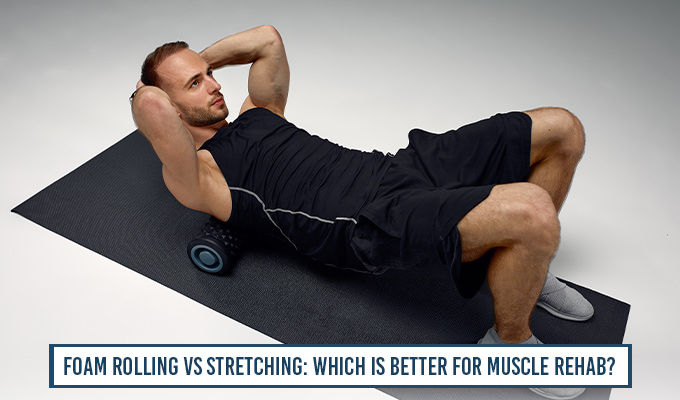
Foam rolling is a self-myofascial release (SMR) technique for muscle tightening and providing flexibility. Here a foam roller is used to involve body pressure and massage sore or tight muscles. This process helps to loosen up their tight or sore muscles and improves flexibility.
The popular foam rolling techniques address the important muscle groups that consist of the IT band, calves, quads, and hamstrings. The act of slowly rolling across your muscles helps you to experience remarkable foam roller benefits like improved blood flow, relieved muscle soreness, and faster recovery.
Discover the perfect balance of foam rolling and stretching with our expert-backed rehab plans

Stretching is a form of physical exercise in which a specific muscle or tendon is deliberately flexed or elongated in order to reduce felt tension and achieve comfortable muscle tone. It has two variations: dynamic stretching and static stretching. Dynamic stretching involves intentional movements that engage muscles before exercise, whereas static stretching involves sustaining a position in order to elongate muscles after exercise.
The benefits of stretching are plenty—better flexibility, enhanced range of motion, prevention of injuries, and improved muscle after exercise. Following the correct time to stretch is key: Dynamic stretches activate muscles before exercise, while static stretching must be performed after the exercise, as it helps muscles cool down and recover effectively. Smart stretching activities protect your muscles from injuries while maintaining their strength.
When it comes to foam rolling vs stretching, both have distinct roles in recovery and performance. Using foam rolling techniques immediately after exercise brings the best results, particularly in cases of muscle tightness or soreness. It works on breaking down adhesion within muscle tissue; the method facilitates deep relaxation and speeds up blood circulation.
On the other hand, stretching focuses more on the elongation of muscle fibre and long-term flexibility enhancement. Dynamic stretching before starting exercises supports during workouts and enhances muscle activation, while static stretches after exercise prevent muscle stiffness and assist recovery.
Experts usually recommend performing both muscle recovery techniques for optimal results. A study published in the Journal of Athletic Training says foam rolling helps in pain reduction while stretching enhances both flexibility and joint function.
In short, a quick solution for muscle tension relief can be achieved through using foam rollers. While stretching stands essential for long-term muscle flexibility, prevention of injuries, and improved posture. The combination of foam rolling with stretching provides you with more powerful and faster recovery results.
For muscle rehab purposes, there is no universal approach. Different situations require different solutions to address them. For instance, when dealing with delayed onset muscle soreness (DOMS) or acute stiffness after a tough workout session, foam rolling can be the best way to treat this condition. The procedure targets tight knots and trigger points to allow relaxation and accelerate healing by improving nutrient flow.
Stretching, on the other hand, works best as a method for rebuilding muscle flexibility, restoring proper muscle length, and providing long-term relief of joint tension over time. It’s best for injury rehabilitation, especially during long-term injury rehab, since it helps patients achieve full range of motion.
To maximise your recovery, most physiotherapists advise patients to use foam rolling as their first step followed by stretching since stretching helps maintain healthy
muscle elongation while foam rolling loosens stiff muscles. Curious how professional therapy fits in for you? Explore this blog: “How Can Muscle Rehabilitation Therapy Improve Muscle Function?” It will give you better understanding.
I am a certified fitness trainer in Mumbai, providing invaluable support to anyone committed to or serious about structured recovery. I create a personalised exercise programme that suits your needs.
Ultimately, when it comes to muscle rehab, foam rolling and stretching both have irreplaceable roles—working together for a complete recovery!
Wondering how to prevent muscle soreness before it even starts? It’s simpler than you think! You need methods to prevent muscle soreness. Initiate a workout with a warm-up that preps or makes muscles ready for an upcoming workout. After workouts always take time to perform light stretching combined with foam rolling to properly cool down.
Hydration is another major factor. The elasticity of muscles depends on proper hydration and helps to avoid muscle cramps. Also, you should nourish your body with well-balanced meals that contain proteins, minerals, and anti-inflammatory nutrients.
Lastly, rest and adequate sleep should be prioritised to let your muscles rebuild stronger. Prevention is better than cure whenever it comes to soreness and stiffness.
Still, the decision remains uncertain? Here’s the takeaway: you do not need to choose one! Both techniques provide different benefits that complement your recovery needs and your performance goals.
If you need muscle relief after intense exercises, foam rolling methods are the best options to go for. And if you want to target growth in flexibility and stay injury-free, stretching is your ideal option. Both muscle recovery methods together function excellently.
Experiment, understand your body signals, then make necessary adjustments. Your muscles deserve the best and highest quality care, as they are the big support to enhance your performance.
The combination of foam rolling with the stretching method serves major role in muscle rehabilitation to improve flexibility, boost recovery time, and reduce the chances of injury. Integrating both into your daily practices can offer the best outcomes for complete muscle health. If you are unsure about appropriate recovery techniques or fitness methods to achieve your targets, don’t hesitate to contact me for guidance. As a certified trainer in Mumbai, I can help you establish personalised fitness plans which keep you performing well while minimising the injury risks.
Discover the perfect balance of foam rolling and stretching with our expert-backed rehab plans